Draft rules setting out minimum standards for a nationally-funded electric vehicle charging network were published in June and are now close to being finalized, Klein said.
“With the minimum standards coming out, you'll see a lot more [requests for proposals] hitting the streets,” Klein said. “There's a tremendous amount happening. And I think you'll see even more happening in the next few months.” Electric Car Home Charging Station
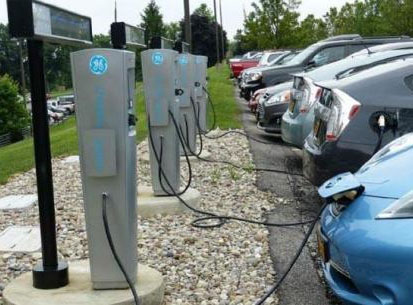
The draft rules include requirements for standard plugs, American-made EV chargers and minimum uptimes, among other requirements.
The Joint Office of Energy and Transportation was formed by the Department of Energy and Department of Transportation to support development of a 500,000-station national network called for by President Joe Biden. He also wants half of new U.S. car sales to be electric by 2030.
Ultimately, that will require roughly $90 billion in infrastructure investments, Klein said, with the bulk coming from the private sector. “We're basically reinventing the whole economy around renewable energy and electrification,” he said.
In the efforts to electrify broadly, “a huge piece of this, of course, is making sure that we electrify and create efficiencies within the home environment,” Granholm said.
DOE on Wednesday announced an Equitable and Affordable Solutions Electrification Prize to innovators “who can help simplify the electrification processes for contractors and implementers,” and a funding opportunity for $45 million to accelerate the installation of heat pumps in buildings.
Alejandro Moreno, acting assistant secretary for DOE’s Office of Energy Efficiency and Renewable Energy, said the agency’s focus on electrification is shifting from the development of new technologies to focus on ways to catalyze the adoption and deployment of clean energy technology.
“The technologies we need to electrify the vast majority of building [energy] use right now exist, particularly around heat pumps and stoves,” Moreno said. Where there are challenges, he said, are in aggregating and managing the new demand.
“The ability of demand flexibility to provide critical services to the grid is essential,” Moreno said. “It's something that is widely seen as a critical element of the power system of the future. And there are ... huge challenges just around the integrated management of load ... when it's aggregated across many, many buildings and zones within a community.”
Utilities are making investments necessary to serve and manage the new load, National Grid New York President Rudy Wynter said at the summit. Those include installing dynamic line rating technologies to send more energy across transmission lines, devices to identify and isolate grid faults more rapidly, and smart meters intended to give customers more control over their bills.
National Grid is preparing to deploy about 1.7 million next-generation smart meters across upstate New York, Wynter said. “It’s a really exciting time as we look to modernize the grid to make sure it is ready for the electrification that we want and absolutely need,” he said.
National Grid is also a gas utility, and Wynter said “not every building can be electrified.” The utility is working to decarbonize its natural gas network by blending in renewable natural gas and green hydrogen to displace the fossil gas, he said.
Get the free daily newsletter read by industry experts
X-energy says 67 GW from SMRs will need to be installed by 2040 in the U.S., Canada and U.K. to offset the retirement of coal and other fossil fuel plants and meet expected increases in demand.
Utilities want distribution system technologies for more DER visibility and control. But advocates want a new national stakeholder dialogue about the timing of spending for DER integration.
Subscribe to Utility Dive for top news, trends & analysis
Get the free daily newsletter read by industry experts
X-energy says 67 GW from SMRs will need to be installed by 2040 in the U.S., Canada and U.K. to offset the retirement of coal and other fossil fuel plants and meet expected increases in demand.
Utilities want distribution system technologies for more DER visibility and control. But advocates want a new national stakeholder dialogue about the timing of spending for DER integration.

Electric Car Charging Companies The free newsletter covering the top industry headlines